Ham with Pineapple Jam
The Germanic pagan ritual of Sonargöltr and its significance

From Valhalla to Valinhos: The Ancient Roots of Brazil’s Pineapple Ham
In many Brazilian households, the centerpiece of the Christmas feast isn’t just a turkey—it’s a glistening, clove-studded ham glazed with sweet pineapple jam. While it feels perfectly tropical, this dish carries a secret: it is actually a culinary "fossil" of ancient Germanic paganism.
The Boar of the Sun
Long before the arrival of Christianity in Northern Europe, the winter solstice was a time to honor Freyr, the Norse god of fertility, sun, and rain. Freyr was famously associated with a golden boar named Gullinbursti.
To ensure a productive spring and a bountiful harvest, a wild boar was sacrificed during the Yule festivities. This tradition, known as the Sonargöltr, involved swearing oaths over the head of the boar before it was cooked and shared among the community.
The Germanic Migration to Brazil
Fast forward to the 19th and 20th centuries. Thousands of German immigrants settled in the southern regions of Brazil, bringing their language, architecture, and—most importantly—their holiday traditions.
The "Yule Boar" had already evolved into the Christmas Ham (Weihnachtsschinken) in Europe. However, once in Brazil, these immigrants adapted to the local larder. The traditional European fruits used for glazes (like apples or cherries) were often swapped for what grew in abundance under the Brazilian sun: the pineapple.
Why the Pairing Works
The marriage of ham and pineapple isn't just historical; it’s scientific.
The Enzyme Factor: Pineapples contain bromelain, an enzyme that naturally tenderizes the meat.
The Flavor Profile: The high acidity and sugar content of the pineapple jam cut through the salty, smoky fat of the cured pork, creating a balanced "Agrodolce" (sweet and sour) profile.
A Dish of Two Worlds

Today, when you see a Presunto de Natal (Christmas Ham) decorated with pineapple rings and Maraschino cherries in a Brazilian market, you are looking at a 2,000-year-old ritual. It is a dish that bridges the gap between the snowy forests of ancient Scandinavia and the vibrant, tropical heat of modern-day Brazil.
Fun Fact: The tradition of the "Christmas Ham" in the United States and the UK shares this same Norse origin, though the pineapple twist is a uniquely "New World" evolution!
The immigration of Germans to Brazil and their culinary traditions
The immigration of Germans to Brazil dates back to the 19th century, with a significant influx occurring in the late 1800s and early 1900s. These immigrants brought with them a rich cultural heritage, including their culinary traditions. The Germans settled in various regions of Brazil, including the southern states of Santa Catarina, Rio Grande do Sul, and Paraná. Today, the descendants of these immigrants continue to celebrate their cultural heritage through various traditions, including the preparation and consumption of traditional German dishes.
German immigrants to Brazil brought with them a variety of culinary traditions, including the use of pork in their dishes. One dish that has become particularly popular among Brazilian Germans is ham with pineapple jam, a sweet and savory delicacy that combines the saltiness of ham with the sweetness of pineapple. This dish is often served during special occasions, including Thanksgiving and Christmas, and has become a staple of Brazilian German cuisine. Other traditional German dishes that have become popular in Brazil include sauerkraut, bratwurst, and various types of bread and pastries.
Food plays an important role in German culture, with meals often serving as a way to bring families and communities together. Traditional German dishes are often prepared using fresh, locally-sourced ingredients and are typically made from scratch. The importance of food in German culture is reflected in the many festivals and celebrations that revolve around food, including Oktoberfest, which originated in Germany but has become a popular event in Brazil as well. Through their culinary traditions, German immigrants have left a lasting impact on Brazilian cuisine and continue to celebrate their cultural heritage through the food they prepare and share with others.
The creation and popularity of ham with pineapple jam in Brazil
Ham with pineapple jam, a popular dish among German immigrants in Brazil, has its roots in the Germanic pagan ritual of sacrificing a wild boar to the Norse god Freyr during Thanksgiving. The connection between the dish and the ritual lies in the choice of pig as the main ingredient. In ancient Norse tradition, the sacrifice of a pig was believed to implore Freyr to show favor to the new year. The dish itself consists of ham cooked with a sweet and tangy pineapple jam, which was likely introduced to Brazil by German immigrants in the early 20th century.
Ham with pineapple jam has become a cultural icon in Brazil, particularly in the southern regions where there is a large population of German immigrants. The dish is often served during Christmas and other festive occasions, and is considered a staple in Brazilian cuisine. The sweet and savory flavors of the dish are a perfect representation of the blending of cultures that has occurred in Brazil, with German and Brazilian culinary traditions coming together to create a unique and delicious dish.

The popularity of ham with pineapple jam among Germans in Brazil can be attributed to the dish's ability to evoke feelings of nostalgia and connection to their homeland. Many German immigrants in Brazil brought their culinary traditions with them, and the dish became a way for them to maintain a connection to their culture and heritage. Additionally, the dish's popularity can be attributed to its versatility and ease of preparation, making it a go-to option for large gatherings and celebrations. Overall, ham with pineapple jam is a testament to the enduring influence of cultural traditions, and the way in which they can evolve and adapt over time and across borders.
🍴 Recipe: Traditional Brazilian Christmas Ham (Presunto de Natal)
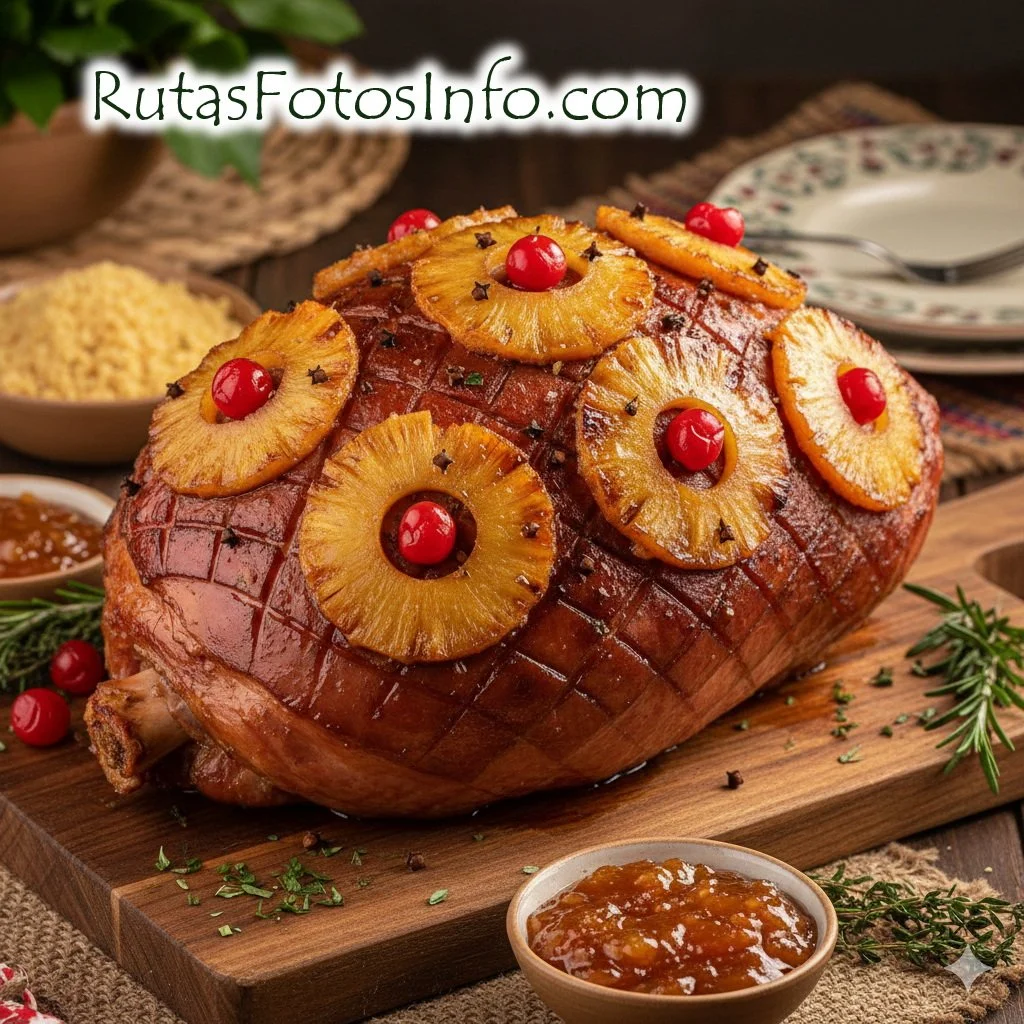
A tropical evolution of the ancient Yule Boar, featuring a spiced pineapple glaze.
Prep Time - 20 Minutes Cook Time 1.5 - 2 Hours Servings 10-12 People
Ingredients
The Roast:
1 Whole Smoked Ham (approx. 3-4 kg), pre-cooked/tenderized.
Whole Cloves for studding the meat.
1 cup Dry White Wine or Sparkling Cider (for the pan).
The Tropical Glaze:
1 cup Pineapple Jam (smooth or chunky).
1/2 cup Brown Sugar.
2 tbsp Dijon Mustard (adds a Germanic kick).
1 tsp Ground Cinnamon.
1/4 tsp Ground Ginger.
The Garnish:
1 can Pineapple slices (reserve the juice).
Maraschino Cherries.
Instructions
Prep the Ham: Preheat your oven to 180°C. Score the surface of the ham in a diamond pattern, about 1 cm deep. Place a whole clove at the intersection of each diamond.
Create the Glaze: In a small saucepan over medium heat, combine the pineapple jam, brown sugar, mustard, and spices. Add 2 tablespoons of the reserved pineapple juice. Simmer for 5 minutes until the sugar is dissolved and the glaze is syrupy.
The First Roast: Place the ham in a roasting pan. Pour the wine or cider into the bottom of the pan to keep the meat moist. Brush a generous layer of the glaze over the ham. Cover loosely with foil and bake for 1 hour.
The Decoration: Remove the ham and discard the foil. Use toothpicks to pin the pineapple slices and cherries onto the surface. Brush the remaining glaze over the fruit and the meat.
The Caramelization: Increase the oven temperature to 200°C. Bake for another 20–30 minutes, basting occasionally with the pan juices, until the pineapple edges are slightly charred and the ham is beautifully bronzed.
Rest and Serve: Let the ham rest for at least 15 minutes before carving. This ensures the juices redistribute, giving you a tender slice every time.
💡 Pro-Tip
For a truly authentic "German-Brazilian" experience, serve this alongside Farofa (toasted cassava flour) sautéed with onions and butter. The dry crunch of the Farofa is the perfect textural contrast to the sticky pineapple glaze.